
Cell Line Technology Transfer: What Actually Travels With the Vial
Trade policy just pushed cell line technology transfer up the priority list. On September 23, 2026, Commerce’s Bureau of Industry and Security published procedures implementing Proclamation 11020. Those procedures took effect on September 29, 2026. The notice sets a zero tariff rate for qualifying specialty categories. Cell and gene therapy products and antibody-drug conjugates both appear on that list. Consequently, many sponsors are now sketching a second production site inside the United States. However, moving a program takes more than shipping a frozen vial.
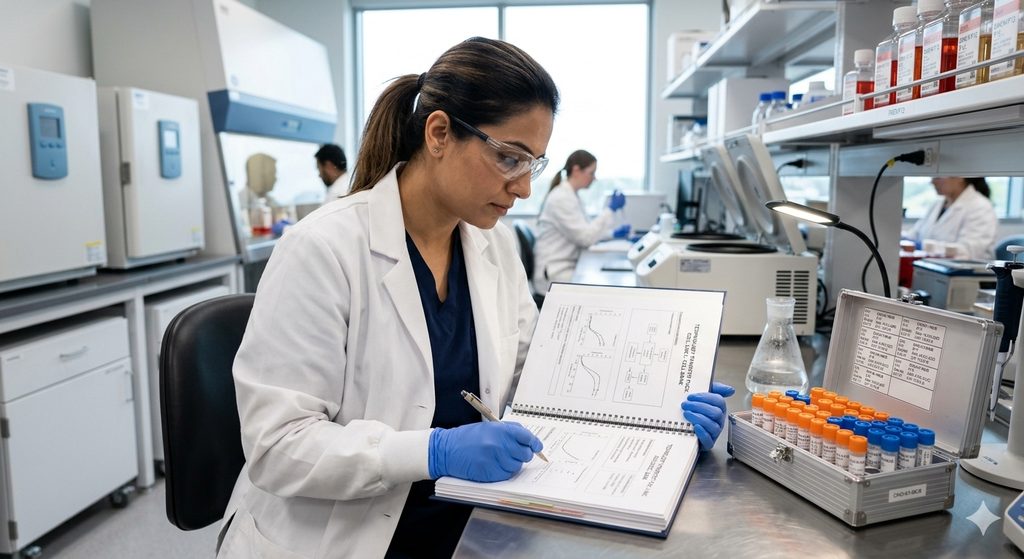
Why Cell Line Technology Transfer Is Harder Than Shipping Cells
A cryovial carries genetics, not process knowledge. A receiving lab can therefore thaw the correct clone and still miss the original growth rate or titer. Media lots differ between suppliers. Seeding densities drift between operators. Vessel geometry changes shear and gas transfer. Therefore a clone taken from roller bottles into spinner flasks may behave differently. For example, mixing and oxygen delivery in a stirred vessel never match a rolled surface. As a result, comparability work belongs in the plan from the first week. FDA’s ICH Q5E guidance describes the principles regulators apply when a manufacturing process changes.
What Belongs in a Cell Line Technology Transfer Package
Documentation does most of the heavy lifting. First, confirm identity using STR profiling, plus whole genome sequencing when a construct needs verification. Next, cover safety with mycoplasma and sterility testing. Additionally, a test vial thaw confirms post-thaw viability before anyone commits a production run. Passage history matters too, because clone performance can shift during extended culture. Finally, record media and feed lots, supplements, seeding density, and harvest criteria. Cell Culture Company issues a Certificate of Analysis and complete batch documentation with every cell banking project. Our cell line characterization services then confirm identity and function at the receiving end.
Three Steps Before You Ship the Bank
Bank before you move. A properly sized master and working cell bank keeps a program off a single vial. Additionally, off-site storage adds a second layer of protection. Meanwhile, agree on acceptance criteria with the receiving site. Viability, doubling time, and product titer all deserve numeric targets rather than vague expectations. Finally, run a small bridging study before full expansion. An early mismatch costs far less than a failed campaign.
Tariff scope and exemptions may still shift, so treat the trade details as current guidance rather than settled fact. The scientific lesson holds regardless: documented cell lines move well, and undocumented ones do not.
Frequently Asked Questions
How long does a cell line technology transfer take?
Timelines vary with product and scale. Simple research-use transfers can finish in weeks. Regulated programs, however, often need several months for banking, testing, and bridging runs.
Does a cell line technology transfer need new characterization?
Usually yes. Identity and sterility testing at the receiving site guards against shipping mix-ups. Additionally, it gives reviewers a clean record for the new location.