
Insect Cell Expression in Recombinant Protein Programs
Insect cell expression returned to the news on October 29, 2026. Novavax announced a $125 million milestone after the fifth patient was dosed in Sanofi’s Phase 3 influenza-COVID-19 combination trial in Europe. Those deal terms are company-reported. Still, the antigen inside that study comes from insect cells, and that detail matters upstream.
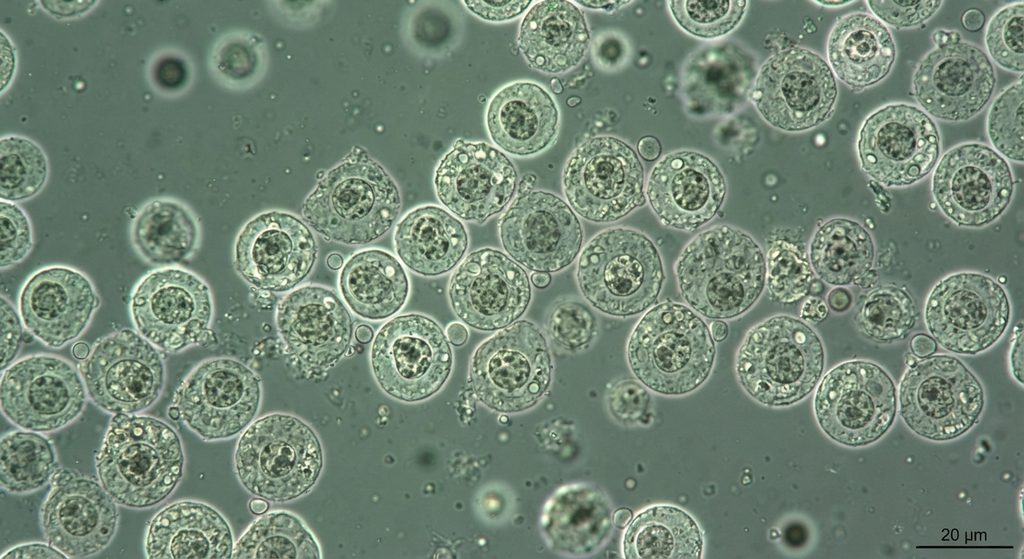
Why Insect Cell Expression Suits Antigen Work
FDA’s package insert for the vaccine describes a spike protein “produced by recombinant DNA technology using a baculovirus expression system” in “the Sf9 insect cell line” (FDA). Baculovirus platforms therefore carry real clinical precedent.
Three traits explain the appeal. First, insect cells reach high density in serum-free suspension culture. Next, baculovirus infection drives strong output without building a stable clone. Finally, multi-subunit complexes often assemble well. Consequently, vaccine developers, structural biology groups and reagent manufacturers all keep Sf9 and Hi5 lines close at hand.
Glycosylation differs from mammalian output, however. Insect cells add simpler, paucimannose-type glycans rather than complex sialylated ones. That profile suits some targets and rules out others. Therefore host choice belongs at the front of a program, not after the first failed batch.
What Insect Cell Expression Changes at the Bench
Media, feeding and harvest timing all shift. Infection kinetics set the window, because expression peaks and then falls as cells lyse. Harvest timing consequently becomes a process parameter rather than a scheduling detail.
Purification planning changes too. Host proteins and baculovirus particles both enter the stream, so clarification and capture need early attention. Our protein production services cover purification from analytical through preparative scale. Scale shapes that plan as well, since a small feasibility run and a 200 L batch raise different clarification questions.
Documentation still decides reproducibility. Identity, passage history and lot records carry the same weight here as in a CHO program. Academic labs feel that pressure too, since reviewers increasingly expect traceable starting material.
Running Both Hosts Under One Quality System
Novavax reports that a $75 million manufacturing technology transfer milestone is expected in mid-2027. Platform and documentation decisions therefore earn their keep now.
Cell Culture Company has worked from a single Shoreview, Minnesota facility since 1983. We develop both mammalian and insect cell lines, and one US-based team carries a project from gene sequence through expansion, production and purification under our ISO 9001:2015 quality system. Suspension culture runs from 10 to 200 L, shaker flasks reach 10 L, and adherent culture handles up to 75,000 cm² per batch. As a result, feasibility studies and repeat production batches share the same records and the same scientists.
Frequently Asked Questions
When does insect cell expression make sense?
Often for antigens, virus-like particles and multi-subunit complexes. However, glycosylation requirements decide the answer, so review the target first. Mammalian hosts remain the better route when complex human-type glycans drive function.
Can one partner handle mammalian and insect lines?
Yes. We develop and expand both, which keeps a side-by-side comparison honest. Additionally, one team avoids restarting the quality record midstream.